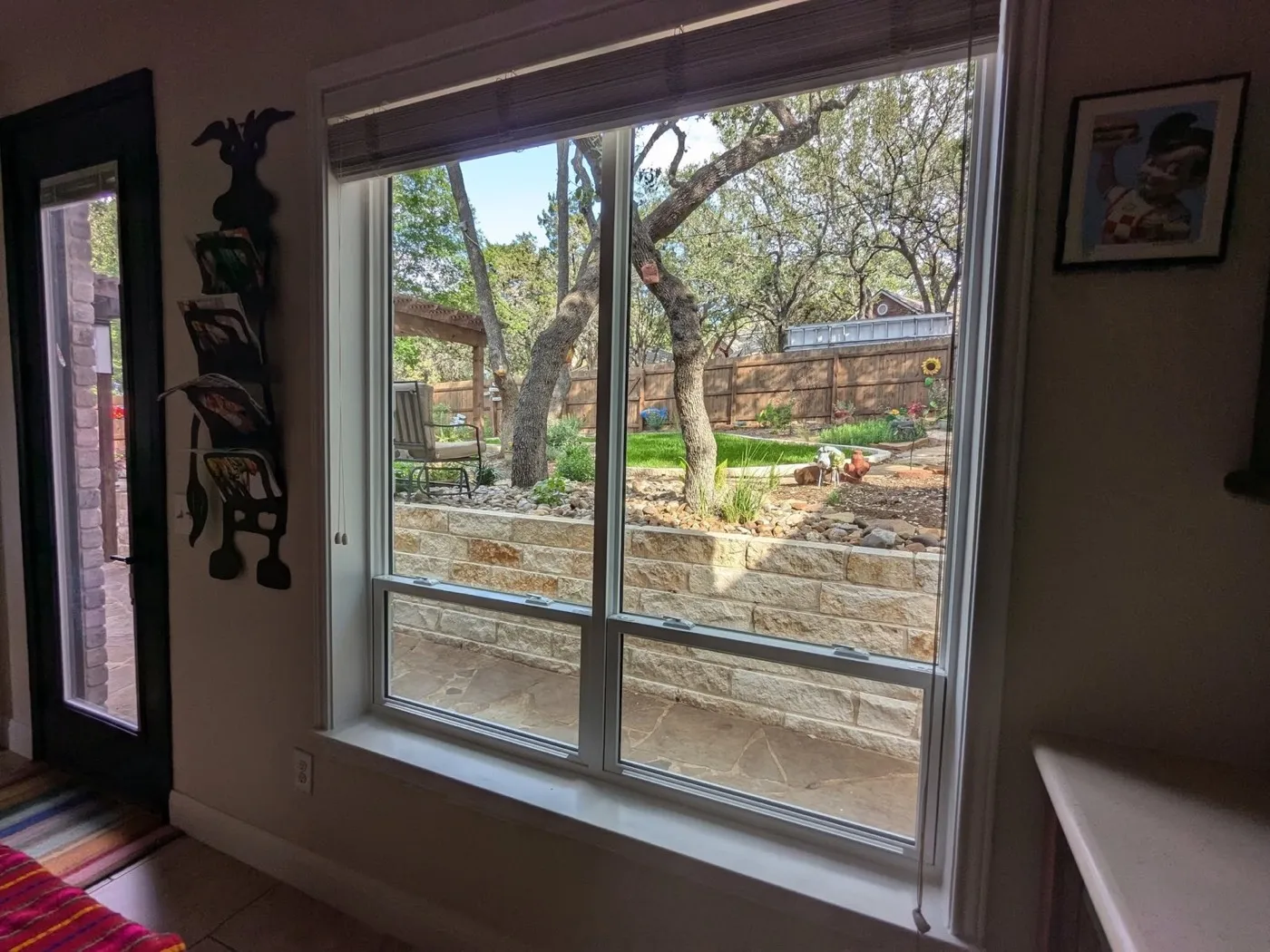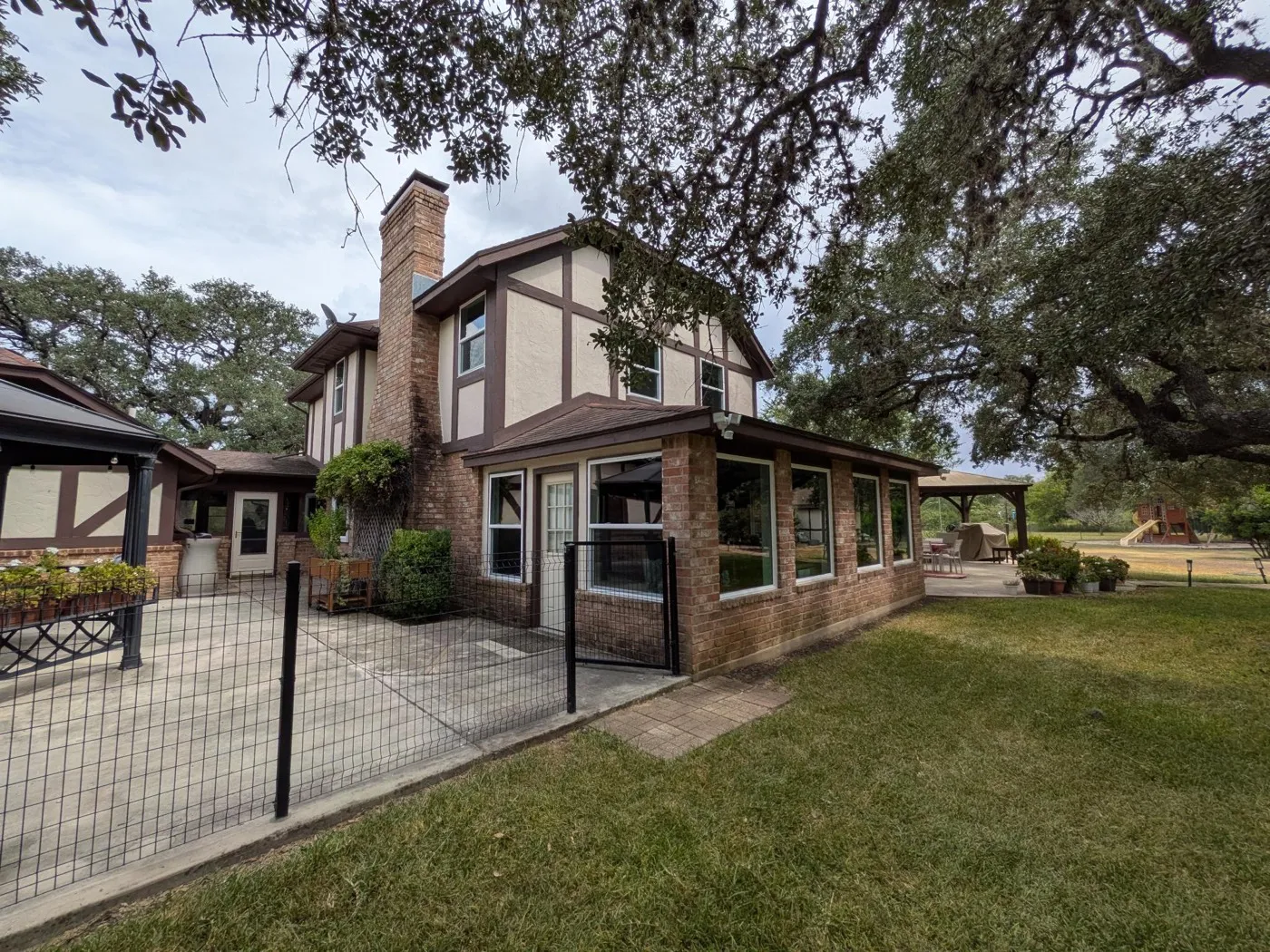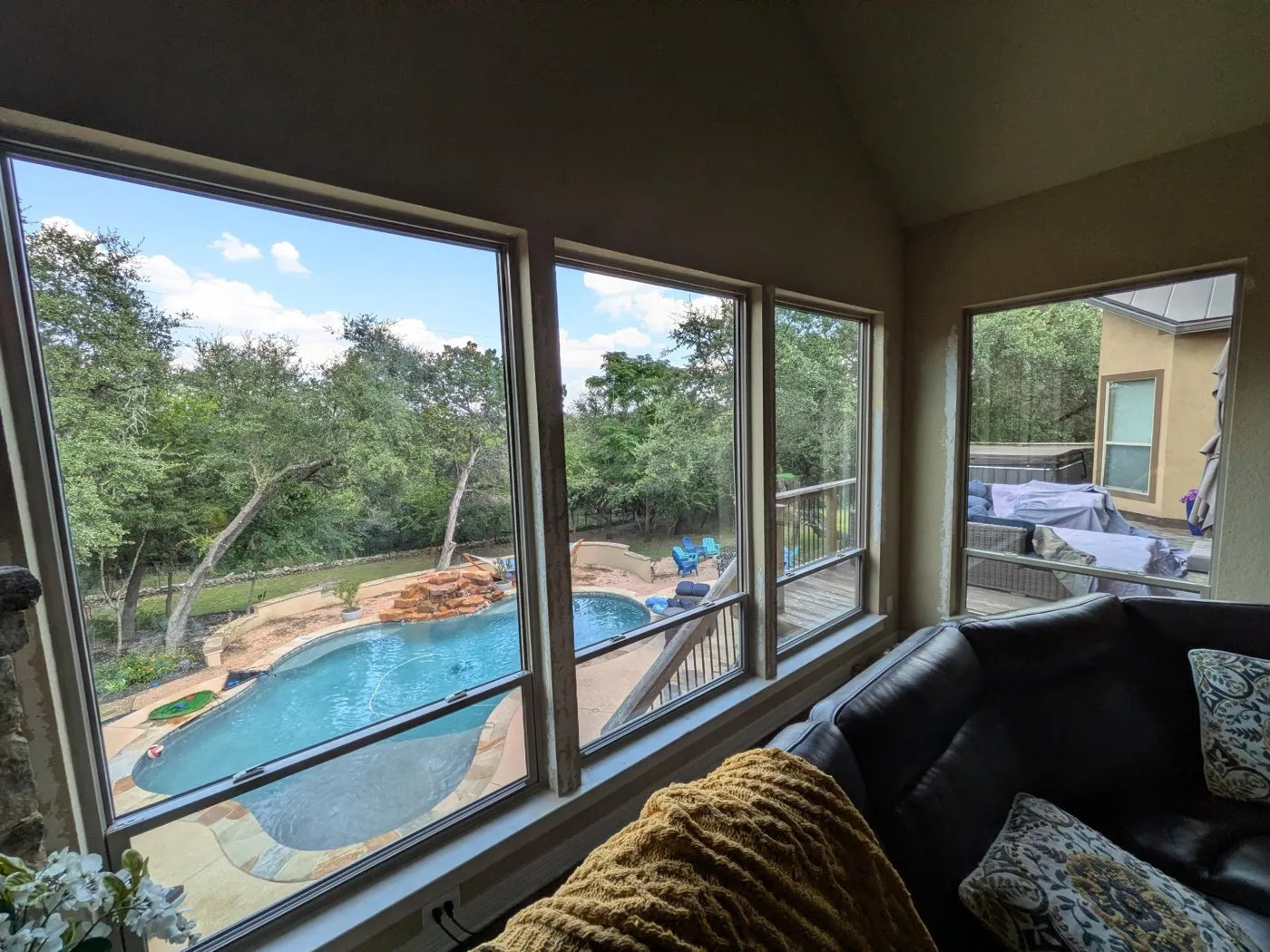
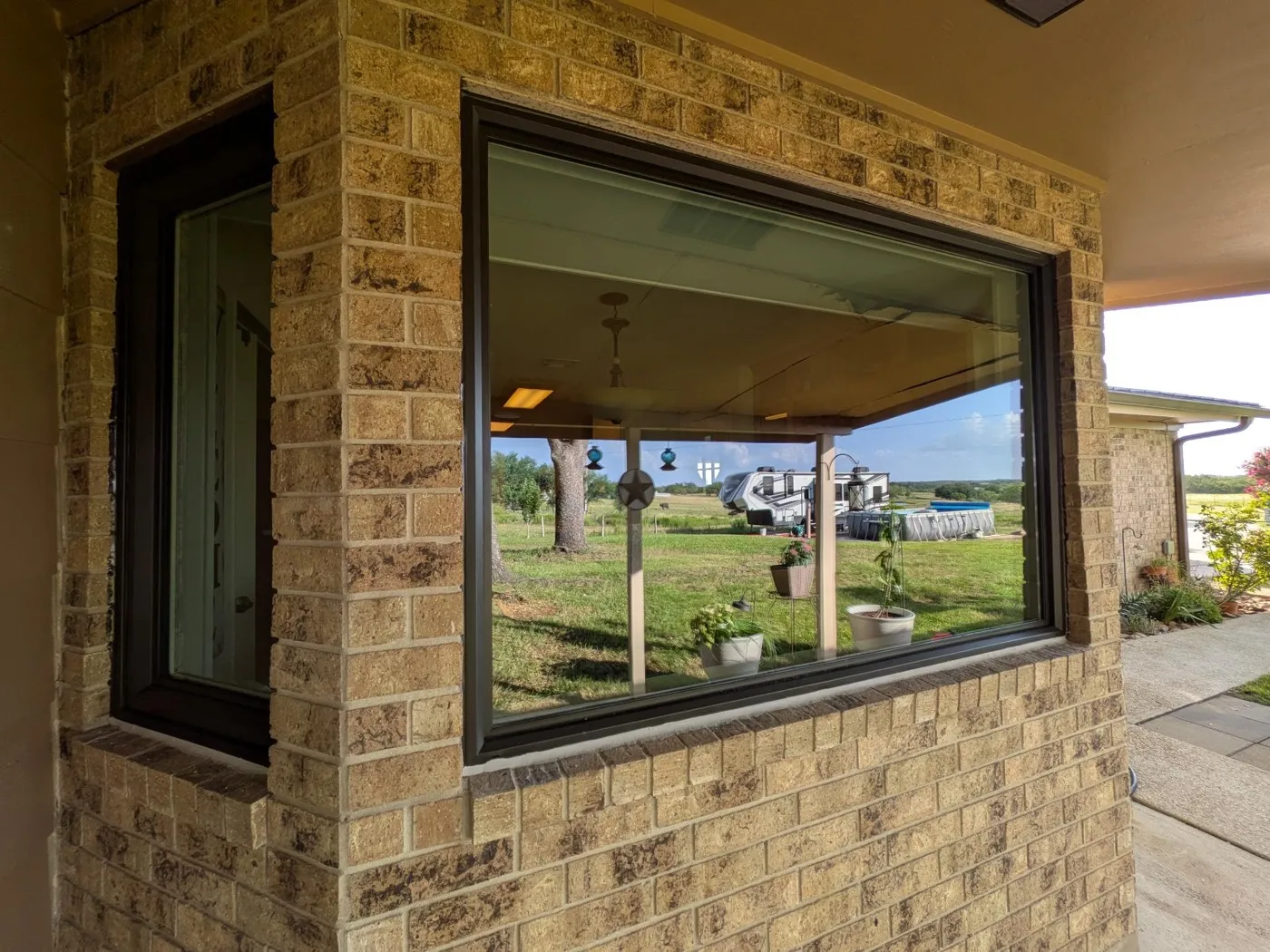
Walk into a west-facing room at 5 p.m. in August and you can feel the windows working against you. Some of that heat soaks through the glass and frame from the hot air outside. A lot of it comes in as sunlight, straight through the glass. The rating that tells you how much sun a window lets in is the solar heat gain coefficient, or SHGC. In San Antonio, it’s the first number to check on any quote.
What SHGC measures
SHGC is the share of the sun’s heat that makes it through the whole window, frame included, on a scale from 0 to 1. A window rated 0.22 lets in about 22% of the solar heat that hits it. Lower means less heat.
To give you a sense of the range, here are NFRC ratings for two single-hung windows we install:
| Glass | Example (NFRC rating) | SHGC |
|---|---|---|
| Solar-control Low-E with argon | Anlin Catalina, Infinit-e | 0.22 |
| Strongest double-pane solar glass | Anlin Catalina, SunShield | 0.14 |
Older single-pane windows with clear glass let in even more: a Department of Energy guide rates a single pane in a metal frame at 0.73. If that’s what you have now, a new window lets in much less of that sun.
These are whole-window numbers, the kind printed on the NFRC sticker. For how the different Low-E coatings work, see our guide to Low-E glass.
Why it’s the first number to check here
Two numbers on every window label measure heat. U-factor is how fast heat soaks through the window from the hot side to the cool side. SHGC is how much sunshine gets through. Up north, where heating is the big bill, U-factor gets the attention. San Antonio is the other way around: we pay to cool, and the sun is a big part of the load.
The Department of Energy’s window guide for builders says it plainly: “In hot climates, where solar gain is often more important than conductive heat transfer, using a higher performance glazing system can be much more important than improving the insulating value of the frame.”
EPA’s own modeling points the same way. When it set the current ENERGY STAR window rules, EPA had Lawrence Berkeley National Laboratory model a 2,380-square-foot house with 357 square feet of windows. In the Southern zone, which includes San Antonio:
- Lowering SHGC from 0.25 to 0.20, with U-factor held at 0.32, saved about $24 a year.
- Lowering U-factor from 0.35 to 0.28, with SHGC held at 0.23, saved about $21 a year.
A smaller step in SHGC was worth more than a bigger step in U-factor. EPA wrote that “a lower SHGC of 0.20 could save significantly more energy in the Southern Climate Zone.” It weighed that against daylight, because glass that blocks more heat also lets in less light (more on that below), and set the limit at 0.23.
Two caveats. U-factor still counts here; $21 a year adds up over the life of a window. And between two good windows, the modeled difference is tens of dollars a year, not hundreds. The big gaps are between glass made for a hot climate and glass that isn’t: clear glass lets in about three times the solar heat of a 0.22 window.
What ENERGY STAR and code require here
ENERGY STAR sets limits by climate zone. Its current rules (version 7.0) put San Antonio (Bexar County), New Braunfels (Comal), and Schertz and Cibolo (Guadalupe) in the Southern zone:
- SHGC 0.23 or less
- U-factor 0.32 or less
Kendall County, including Boerne’s 78006 ZIP code, is in the South-Central zone. The SHGC limit is the same, 0.23, but the U-factor limit is stricter: 0.28.
Building code is looser. San Antonio has enforced the 2021 International Energy Conservation Code since February 2023. Bexar County is in its Climate Zone 2, where windows need an SHGC of 0.25 or lower and a U-factor of 0.40 or lower, and the code applies to replacement windows too. So a window can pass code and still let in more sun than ENERGY STAR allows. Treat 0.23 as the optional ENERGY STAR maximum, not the code limit.
Many brands’ standard glass misses 0.23
Just about every major brand offers glass that meets 0.23. It’s often an upgrade, though. When we checked published NFRC ratings, the basic Low-E that many brands ship by default rated 0.26 to 0.33.
A few lines still come with clear glass, no Low-E at all, unless you ask.
So a quote that just says “Low-E glass with argon” isn’t telling you enough. Ask for the SHGC.
The solar upgrade worth asking about
Most lines offer a stronger solar package than their standard glass, and the best of them go well past 0.23. On many lines we checked, the strongest double-pane solar glass rates SHGC 0.13 to 0.15. Anlin and VistaMark both have single-hung options at 0.14 in the NFRC directory.
Not every line goes that low. On some, the best solar option is about 0.19 to 0.22. That’s about where other brands’ standard glass already sits.
The strongest glass pays off most where the sun hits hardest: west- and south-facing windows without shade, big picture windows, and sunrooms. You don’t need it everywhere. Our Low-E guide explains how to mix packages room by room.
The trade-off: less daylight
Glass that blocks more of the sun’s heat also blocks more of its light. That’s measured as visible transmittance (VT), the share of visible light that gets through. Higher is brighter; NFRC says a higher VT “means more natural light.”